
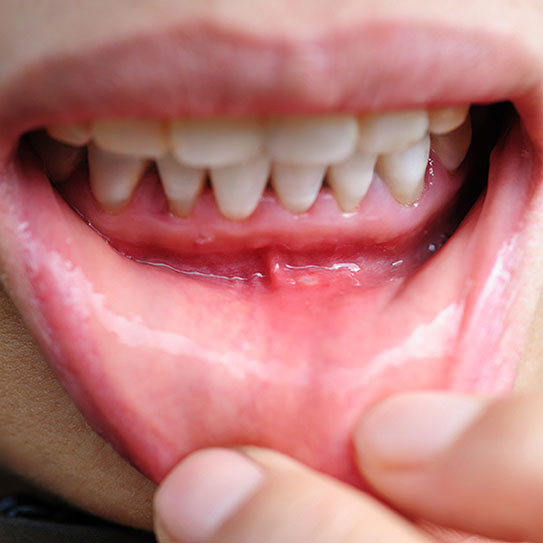
HEALTHY GUMS FIT snugly around each tooth, protecting the roots and keeping your smile strong. Gum recession happens when that tissue gradually pulls back, exposing more of the tooth and sometimes its root. Because it develops slowly, many people don’t notice it until they feel sensitivity or see that a tooth looks longer than it used to. The good news is that recession can often be slowed, stopped, or treated, especially when it’s caught early.
What Causes Gum Recession?
Gum recession usually results from a combination of factors:
- Gum disease. Bacterial infection damages gum tissue and the bone that supports your teeth. It is one of the most common causes of recession in adults.
- Brushing too hard. A hard-bristled brush or an aggressive scrubbing motion can wear gum tissue away over time.
- Genetics. Some people naturally have thin, delicate gums that are more likely to recede.
- Grinding and clenching. Excess force on the teeth can stress the surrounding gums and bone.
- Tooth position. Crowded teeth or teeth that sit outside the jawbone may have thinner gum coverage. Thoughtful orthodontic planning and monitoring help protect the gums as teeth move into better positions.
- Tobacco use. Smoking and chewing tobacco irritate the gums and slow healing.
- Oral piercings. Lip and tongue jewelry can rub against the gums and wear them down.
- Hormonal changes. Puberty, pregnancy, and menopause can make gums more sensitive.
Signs to Watch For
Contact your dental team if you notice:
- Teeth that look longer than before
- Sensitivity to hot, cold, or sweet foods
- A notch you can feel near the gumline
- Red, swollen, or bleeding gums
- Teeth that feel loose
Exposed roots aren’t covered by protective enamel, so they are more vulnerable to sensitivity and decay. Left untreated, recession can lead to more serious problems that affect the inner tooth and its supporting structures.
How to Prevent Gum Recession
- Brush twice a day with a soft-bristled toothbrush using gentle, circular strokes.
- Floss daily to remove plaque between teeth and along the gumline.
- Keep up with regular dental checkups and professional cleanings.
- Ask about a night guard if you grind or clench your teeth.
- Avoid all tobacco products.
- Take extra care if you wear braces. Cleaning around brackets and wires takes more effort, but it keeps gums healthy throughout treatment.
- Start good habits early. Parents can teach children to brush gently and help with brushing until kids have the coordination to do it well on their own.
Treatment Options
Treatment depends on the cause and severity of the recession:
- Deep cleaning. Scaling and root planing remove bacteria and tartar below the gumline so the gums can heal.
- Desensitizing treatments and bonding. These can protect exposed roots and reduce sensitivity.
- Gum grafting. A periodontist can restore lost tissue by covering exposed roots with a graft.
- Correcting the cause. Adjusting brushing technique, wearing a night guard, or straightening teeth can prevent further recession.
- Root canal therapy. If decay on an exposed root reaches the nerve, an endodontist can treat the infection and save the natural tooth.
Protect Your Smile Today
Gum recession is common, but it doesn’t have to be permanent damage. Early detection makes treatment simpler and more effective. If you’ve noticed sensitivity or changes in your gumline, schedule a visit with our team.
We’ll find the cause and help you keep your smile healthy!
The content on this blog is not intended to be a substitute for professional medical advice, diagnosis, or treatment. Always seek the advice of qualified health providers with questions you may have regarding medical conditions.



Visit Fairfield Smiles By Design
Call us today!